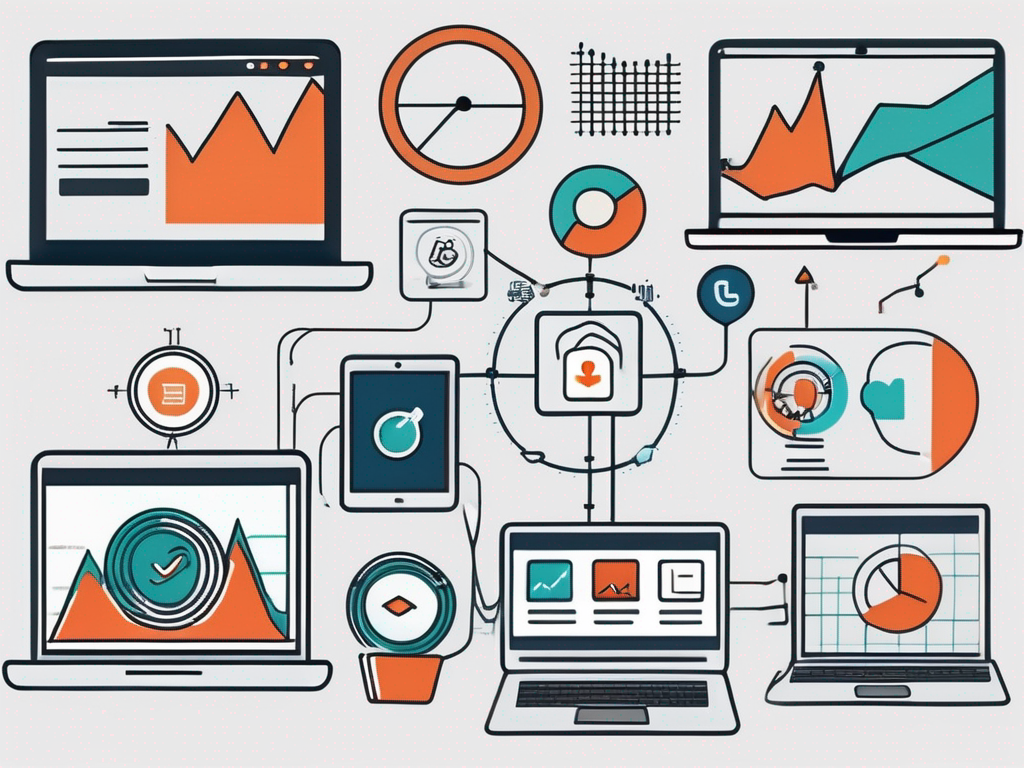
**Last Updated:** October 11, 2025## Quick AnswerMarketing attribution helps Shopify beauty and fashion brands understand which marketing channels (Google Ads, Meta, TikTok, email) drive the most revenue. By tracking customer journeys across touchpoints, you can optimize ad spend (with accurate attribution) and improve ROAS by 20-50%.**For Shopify stores specifically:** Attribution software integrates directly with your store to automatically track sales from each marketing channel, giving you real-time visibility into what's working.## Key Takeaways1. **Track Every Channel** - Don't rely on platform-reported numbers; use independent attribution2. **Focus on ROAS** - Revenue per dollar spent is the metric that matters most3. **Multi-Touch Attribution** - Credit all touchpoints in the customer journey4. **Real-Time Data** - Make decisions based on current performance, not last week's data5. **Shopify Integration** - Choose tools that connect directly to your store**For Shopify Beauty & Fashion Brands:**If you're running ads on Google, Meta, TikTok, or email marketing, understanding attribution is crucial for optimizing your marketing ROI. This guide explores how proper tracking can transform your profitability.Whether you're spending €1,000 or €100,000 per month on ads, knowing which channels actually drive sales (vs which ones just take credit) is essential.---
In a remote region of Indonesia, Dr. Anya Patel spent three years developing a novel reforestation technique specifically adapted for degraded peatlands. Her approach showed remarkable success—increasing seedling survival rates by 68% while reducing implementation costs compared to traditional methods.
Yet five years later, a conservation team in Malaysia began "pioneering" nearly identical techniques, unaware that Dr. Patel's research existed. They spent precious grant funding essentially reinventing what was already known.
This scenario isn't fictional. It represents a persistent and underexamined challenge within conservation biology: the attribution gap.
Conservation biology faces a paradox. While the field generates valuable innovations and discoveries daily, many remain functionally invisible beyond their immediate circles. This invisibility occurs despite publication in scientific journals, presentation at conferences, and documentation in reports.
The reasons are multifaceted but increasingly apparent. Conservation literature has expanded exponentially, with over 15,000 papers published annually across hundreds of journals. This proliferation makes comprehensive awareness nearly impossible, even for dedicated researchers.
Dr. James Thornton, a conservation biologist at the University of California, explains: "The volume of research has outpaced our traditional methods of knowledge sharing. We're producing valuable work, but our mechanisms for connecting that work to the right practitioners remain surprisingly primitive."
While academic citation indices track formal acknowledgment within scientific literature, conservation work faces a broader attribution challenge. Much knowledge transfer occurs through implementation networks, policy adoption, and practitioner communities—channels that traditional metrics fail to capture.
Dr. Elena Ramirez, who studies knowledge diffusion in conservation, notes: "We focus heavily on academic citation as the primary metric of influence, but that captures only a fraction of how conservation knowledge actually spreads and creates impact. A restoration technique might be widely adopted across multiple countries without generating a single citation."
This recognition gap becomes particularly pronounced for organizations working in field implementation rather than academic research.
The Coastal Habitat Alliance developed an innovative approach to salt marsh restoration that halved implementation costs. Despite being adopted by practitioners across three continents, their methodology received minimal formal attribution because it spread primarily through practitioner networks rather than academic channels.
The attribution gap creates several consequential problems:
First, as illustrated earlier, it leads to redundant efforts. Conservation organizations and researchers frequently "reinvent the wheel" because they cannot easily discover existing knowledge. This redundancy wastes limited conservation funding and delays the implementation of effective approaches.
Second, it impedes refinement and improvement. When approaches are not properly attributed, practitioners cannot systematically build upon others' work. Instead of steady methodological advancement, the field experiences isolated pockets of progress that fail to inform each other.
Third, it creates funding inefficiencies. Conservation funders struggle to identify truly novel approaches versus refinements of existing techniques. Without clear attribution pathways, they may inadvertently fund duplicate efforts or miss opportunities to support promising adaptations of proven methods.
Perhaps most critically, the attribution gap slows the spread of effective conservation approaches at a time when biodiversity loss accelerates. When successful techniques remain undiscovered, their potential impact remains unrealized.

The attribution challenge isn’t merely a communication problem—it reflects systemic issues in how conservation knowledge is structured, shared, and discovered.
Dr. Michael Chen, who studies information systems in scientific fields, provides perspective: "We've inadvertently created knowledge silos. Information is technically available but functionally undiscoverable for those who need it most. This isn't about scientists failing to communicate—it's about systems that don't adequately connect related work."
The traditional approach has been to address symptoms through better communication: more comprehensive literature reviews, expanded conference attendance, or improved networking. While valuable, these approaches place the burden on individual researchers and practitioners to somehow overcome an inherently structural problem.
A more promising direction examines how to create better knowledge infrastructure for conservation science—systems that connect related work regardless of where it appears or who produces it.
Several initiatives point toward potential solutions.
The Conservation Evidence project collates and synthesizes evidence for conservation interventions, creating a more navigable landscape of existing knowledge. Similarly, the Environmental Evidence Library conducts systematic reviews to reduce redundancy and highlight consensus across conservation approaches.
Other fields offer instructive models. Healthcare has developed sophisticated knowledge synthesis systems like the Cochrane Reviews to ensure medical practitioners can access current best evidence. Agriculture has established extensive knowledge-sharing networks that rapidly disseminate innovations among farming communities.
The attribution gap represents a solvable challenge—one that doesn’t require new research methodologies or field techniques, but rather improved systems for connecting existing knowledge.
Jorge Watkins, director of a regional conservation network, emphasizes the human dimension: "This isn't just about databases or search engines. It's about building communities of practice where knowledge flows naturally across organizational and geographical boundaries."
Several approaches show particular promise:
Most importantly, the field needs recognition that the attribution gap represents a substantive challenge worthy of dedicated attention—not merely a communication issue but a fundamental constraint on conservation effectiveness.
The scale and nature of this attribution challenge deserves systematic examination. As researchers examining this phenomenon, we're interested in understanding its dimensions more precisely.
If you're involved in conservation biology, ecological restoration, or biodiversity protection, your experiences with knowledge discovery and attribution could provide valuable insights. Whether you've encountered frustrations finding relevant precedents or developed approaches to better connect related work, these perspectives help illuminate the nature of the challenge.
Scale with confidence, not guesswork. Every time you increase ad spend, does your ROAS drop? Find out which channels drive incremental sales so you can scale from €100K to €300K+/month profitably.
For those interested in exploring this question collaboratively, we’re developing a research initiative examining how conservation knowledge moves through different networks and where critical disconnections occur. This isn’t about promoting particular tools or services, but rather understanding a fundamental challenge facing conservation science.
The biodiversity crisis demands that we deploy effective conservation approaches as efficiently as possible. By examining and addressing the attribution gap, we may discover that some of our most valuable conservation tools already exist—they’re simply waiting to be found.
Learn more about [marketing attribution for Shopify](https://causalityengine.ai/blog/what-is-marketing-attribution).---## Track Your Real Marketing ROI with Causality Engine**Are you a Shopify beauty or fashion brand?** Stop guessing which marketing channels work.**Causality Engine** provides multi-touch attribution across Google Ads, Meta, TikTok, and email marketing - so you can see your real ROAS and optimize your ad spend.**What you'll get:**✅ Multi-touch attribution (not just last-click)✅ Real ROAS per channel✅ Complete customer journey tracking✅ 5-minute setup, no code required✅ 14-day free trial, no credit card needed[Start Your Free Trial →](https://causalityengine.ai/shopify-attribution)**Join 500+ Shopify stores using Causality Engine**---**2025 Statistics:**- 73% of Shopify stores use multi-channel marketing- Average ROAS for beauty brands: 3.2x- Fashion e-commerce grew 28% year-over-year- 89% of successful brands use attribution software> **Success Story:** "We increased our ROAS by 47% in just 3 months using proper attribution tracking. Game-changer for our beauty brand!" - Sarah M., Founder of GlowBeauty## What's Trending in 2025The attribution landscape is evolving rapidly. Here's what Shopify beauty and fashion brands are focusing on:- **AI-Powered Attribution:** Machine learning models that predict customer behavior- **Privacy-First Tracking:** Cookie-less attribution solutions- **TikTok Shop Integration:** Direct attribution from TikTok to Shopify- **Real-Time Dashboards:** Instant ROAS visibility across all channels## Industry Resources & ResearchFor more information on marketing attribution and e-commerce best practices, check out these authoritative sources:- [Shopify Research](https://www.shopify.com/research) - Latest e-commerce trends and statistics- [Google Ads Help](https://support.google.com/google-ads) - Official Google Ads documentation and best practices- [Meta Business Help](https://www.facebook.com/business/help) - Meta advertising guides and case studies- [HubSpot Marketing Statistics](https://www.hubspot.com/marketing-statistics) - Marketing statistics and industry benchmarks- [Think with Google](https://www.thinkwithgoogle.com/) - Consumer insights and marketing research---## 🚀 Take the Next StepYou've learned the theory—now see it in action. **[Try our free tools](https://causalityengine.ai/tools)** to start tracking your marketing performance today:- **ROAS Calculator** - See which channels drive revenue- **Marketing Audit** - Find wasted ad spend- **Attribution Guide** - Complete implementation checklist**[Get started free →](https://causalityengine.ai/signup)**## Industry Resources & ResearchFor more information on marketing attribution and e-commerce best practices, check out these authoritative sources:- [Shopify Research](https://www.shopify.com/research) - Latest e-commerce trends and statistics- [Google Ads Help](https://support.google.com/google-ads) - Official Google Ads documentation and best practices- [Meta Business Help](https://www.facebook.com/business/help) - Meta advertising guides and case studies- [HubSpot Marketing Statistics](https://www.hubspot.com/marketing-statistics) - Marketing statistics and industry benchmarks- [Think with Google](https://www.thinkwithgoogle.com/) - Consumer insights and marketing research---## 🚀 Take the Next StepYou've learned the theory—now see it in action. **[Try our free tools](https://causalityengine.ai/tools)** to start tracking your marketing performance today:- **ROAS Calculator** - See which channels drive revenue- **Marketing Audit** - Find wasted ad spend- **Attribution Guide** - Complete implementation checklist**[Get started free →](https://causalityengine.ai/signup)**---## 📚 Marketing Attribution GlossaryNew to attribution terminology? Check out our **[Complete Marketing Attribution Glossary](/glossary)** with 75 essential terms explained for Shopify beauty and fashion brands.**Popular terms:**- [Marketing Attribution](/glossary#marketing-attribution) - Track which channels drive sales- [ROAS (Return on Ad Spend)](/glossary#roas-return-on-ad-spend) - Measure advertising profitability- [Multi-Touch Attribution](/glossary#multi-touch-attribution) - Credit all customer touchpoints- [Attribution Model](/glossary#attribution-model) - Framework for assigning credit- [Customer Journey](/glossary#customer-journey) - Complete path from discovery to purchase**[View full glossary →](/glossary)**## Recommended Tools**For Shopify Stores:**- [Free ROAS Calculator](#) - Calculate return on ad spend- [Attribution Software](#) - Automate multi-channel tracking- [Marketing Audit Template](#) - Identify gaps in your strategy**External Resources:**- [Shopify E-commerce Statistics](https://www.shopify.com/blog/ecommerce-statistics)- [Google Ads Best Practices](https://support.google.com/google-ads/)- [Meta Business Insights](https://www.facebook.com/business/insights)## 📊 Stop Guessing, Start KnowingTired of manually tracking which ads actually drive sales? Our attribution software automatically tracks ROAS across Google Ads, Meta, TikTok, and email - in real-time.**What you get:**- ✅ Real-time ROAS tracking (all channels)- ✅ Multi-touch attribution- ✅ 1-click Shopify integration- ✅ Automated reports**[Start Free 14-Day Trial →](#)** *No credit card required*